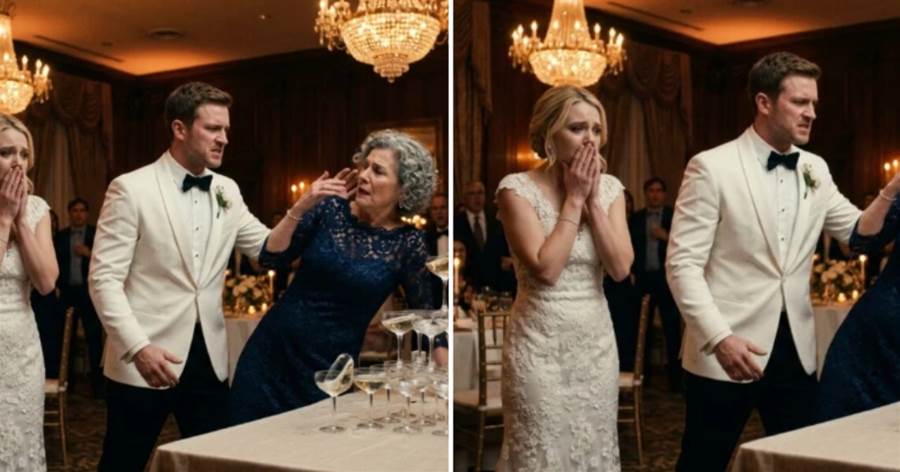
The slap cracked across the banquet hall like a gunshot. For one frozen second, even the chandeliers seemed to stop trembling.
Clara saw her mother stagger, one hand flying to her cheek, her silver hair coming loose from its comb. Around them, the guests went silent. Forks hovered. Wine stopped halfway to mouths. At the head table, Clara’s husband, Mateo Villalba, stood with his palm still raised and his face red with rage.
“Teach your mother to stay in her place,” he hissed.
Clara did not scream.
That was what disappointed them most.
Mateo’s three sisters—Inés, Pilar, and Rocío—sat together like judges in silk dresses. Inés smirked behind her champagne flute. Pilar whispered, “Finally.” Rocío, the youngest and cruelest, lifted her phone as if she hoped Clara would collapse on camera.
But Clara only moved forward, gently held her mother’s shoulders, and said, “Mamá, breathe.
”
Her mother’s eyes filled with tears. “Clara, don’t make a scene.”
Mateo laughed. “She won’t. She never does.”
That was the story they had built around Clara for seven years. Quiet Clara. Grateful Clara. The poor accountant’s daughter who had married into the Villalba family and should kiss the marble floors she walked on. They mocked her modest dresses, her silence at family meetings, the way she took notes while they shouted over her.
The article is not finished. Click on the next page to continue.